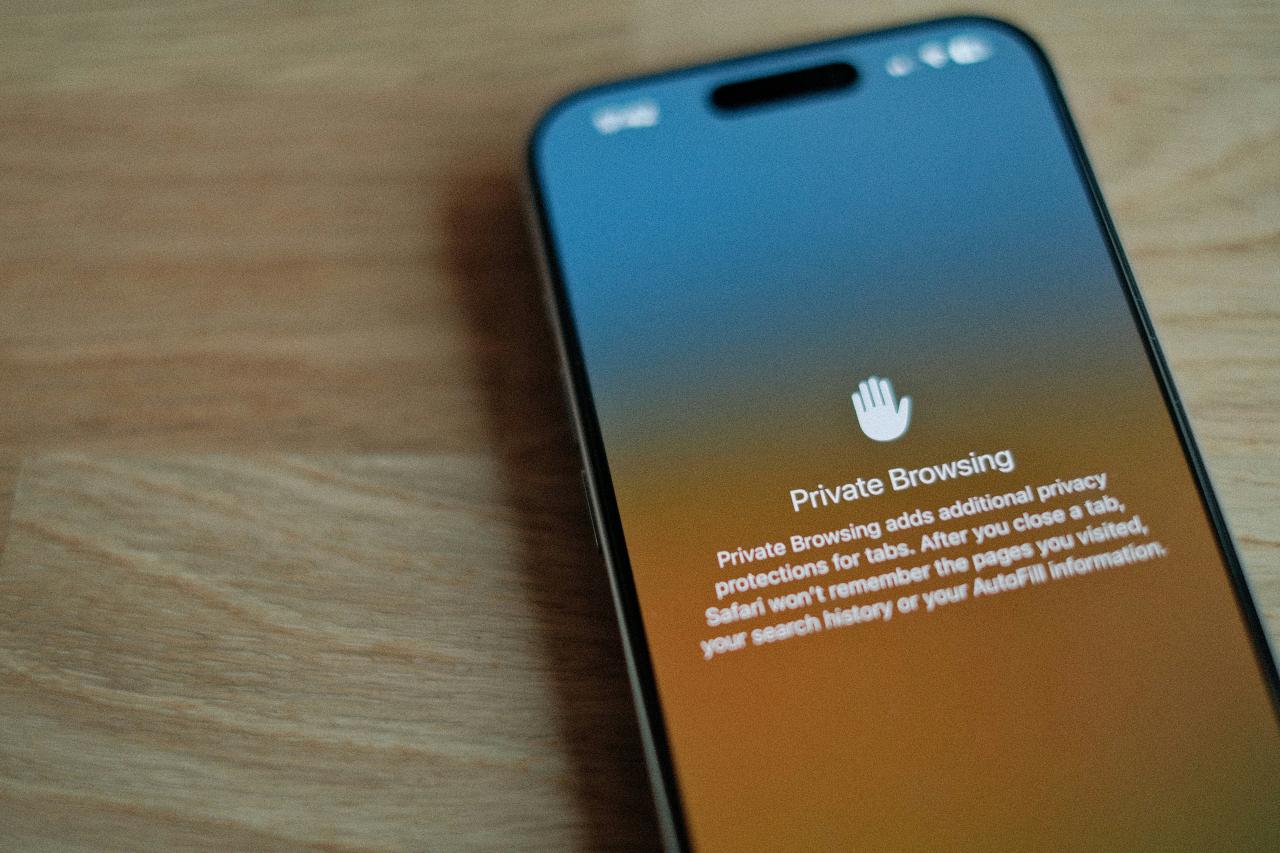
The contemporary digital landscape is undergoing a radical paradigm shift as the integration of high-performance neural engines and decentralized privacy frameworks becomes the new standard for institutional data stewardship. For global technology architects, enterprise security officers, and high-net-worth digital nomads, the implementation of neural engine sovereign privacy infrastructure strategies has evolved into a mandatory requirement to protect sensitive intellectual property from the pervasive threats of the autonomous era.
This complex evolution represents a fundamental departure from traditional centralized cloud security, moving toward a “privacy-by-design” architecture where data is processed locally on-device through dedicated neural processing units (NPUs) rather than being transmitted to vulnerable external servers. In an age defined by the rapid proliferation of generative intelligence and predictive analytics, the ability to maintain a “sovereign” digital perimeter is the primary competitive advantage for any organization seeking to insulate its operations from systemic surveillance and data harvesting.
Achieving a resilient and truly private ecosystem requires a clinical orchestration of edge computing hardware, hardware-based secure enclaves, and zero-knowledge cryptographic protocols that ensure the user remains the absolute owner of their digital existence. As the “internet of thought” begins to take shape, providing a cloistered and secure environment for the execution of private AI models has become the holy grail for wealth managers and corporate leaders who prioritize confidentiality above all else.
This infrastructure is not merely a technical layer but a strategic asset that allows for the seamless fusion of ultra-high-speed intelligence and absolute anonymity. We are witnessing a massive movement toward the utilization of “cloaked” neural engines that can perform complex pattern recognition and decision-making without ever exposing the underlying raw data to the public internet. Furthermore, the integration of real-time hardware-level encryption and biometric neural signatures allows for a proactive rather than reactive response to the sophisticated social engineering and brute-force attacks that characterize the modern digital frontier.
Ultimately, the goal of these elite privacy strategies is to provide a frictionless environment where the pursuit of innovation and digital expansion is never hindered by the fear of data exfiltration or identity compromise. This holistic approach ensures that every bit of processed information is optimized for security, transforming a standard device into a sentient, hyper-secure vault that can navigate the volatility of the global digital economy with surgical precision.
By viewing sovereign privacy infrastructure as a strategic pivot for long-term survival, the modern enterprise can secure a decisive advantage in the pursuit of institutional-grade market leadership within the rapidly maturing “digilife” landscape.
A. The Architecture Of Edge Neural Processing

The foundation of sovereign privacy lies in the transition from cloud-based AI to edge-based neural processing. By utilizing dedicated neural engines built directly into the local hardware, organizations can execute complex machine learning tasks without ever allowing the data to leave the physical control of the owner.
This “on-device” intelligence ensures that sensitive inputs, such as voice commands or biometric data, are processed in real-time within a secure hardware environment. It eliminates the “latency” and “vulnerability” associated with transmitting data to the cloud for processing.
Modern neural engines are specifically optimized for “low-power” and “high-throughput” operations, making them ideal for the portable devices used by the global digital elite. This hardware-first approach is the non-negotiable first step in establishing a truly sovereign digital infrastructure.
B. Hardware Based Secure Enclaves And Trusted Execution
Secure enclaves act as the “vault within the chip,” providing a physically isolated area for the execution of critical privacy protocols. These enclaves are designed to be inaccessible even to the device’s own operating system, ensuring that malware or unauthorized users cannot gain access to the raw neural weights or private keys.
Trusted Execution Environments (TEEs) provide a clinical layer of protection for the most sensitive operations, such as the decryption of sovereign asset data or the signing of high-value transactions. This isolation is essential for maintaining the integrity of the sovereign privacy framework in a hostile network environment.
By combining neural engines with secure enclaves, the infrastructure creates a “double-lock” system. One layer handles the intelligence, while the other handles the security, ensuring that the two never compromise one another.
C. Implementing Zero Knowledge Neural Inference
Zero-Knowledge Proofs (ZKPs) allow a neural engine to prove it has reached a specific conclusion without revealing the private data used to arrive at that result. This is a game-changer for institutional privacy, allowing for “blind” verification of identity or financial status.
For example, a sovereign privacy system can verify that a user has the necessary capital for a transaction without revealing the actual balance of their digital vault. This “privacy-preserving” inference is the cornerstone of the next generation of professional digital life.
Implementing ZKPs at the neural level requires a high degree of computational precision, which is why dedicated NPUs are so critical. It transforms the neural engine into a “truth machine” that protects the user’s secrets with mathematical certainty.
D. Federated Learning And Decentralized Data Privacy
Federated learning allows multiple neural engines to learn from one another without ever sharing their raw data. Instead, only the “encrypted gradients” or local updates are shared with a central coordinator, which then improves the global model for everyone.
This “decentralized” approach to intelligence ensures that the collective knowledge of the network grows while the privacy of the individual remains intact. It is the preferred model for sovereign wealth networks and collaborative corporate research.
By keeping the data local and only sharing the “intelligence,” organizations can collaborate on global challenges without risking their competitive advantage. It is a clinical application of the “internet of value” to the field of machine learning.
E. Biometric Neural Signatures And Identity Cloaking
Traditional passwords and 2FA are increasingly vulnerable to sophisticated hacking, leading to the rise of biometric neural signatures. These signatures utilize the local neural engine to analyze unique physiological and behavioral patterns, creating a dynamic identity that is nearly impossible to spoof.
Identity cloaking goes a step further by using the neural engine to “mask” the user’s digital footprint across different platforms. It creates a “synthetic” persona that allows the user to interact with the digital world without revealing their true identity or location.
This “sovereign” approach to identity ensures that the user’s “digilife” remains private and untraceable. It is the ultimate tool for the luxury nomad who requires total anonymity while navigating the global digital economy.
F. Real Time Threat Intelligence At The Silicon Level
Modern privacy infrastructure includes a proactive “threat-hunting” layer that operates at the silicon level. The neural engine constantly monitors the hardware for any sign of side-channel attacks or unauthorized attempts to access the secure enclave.
By identifying these threats in “nanoseconds,” the system can autonomously neutralize the attack before it can ever reach the data layer. This “hardened” hardware posture is essential for protecting institutional assets from state-level actors and elite hacking syndicates.
This real-time awareness provides the user with a level of confidence that is simply not possible with software-only security. It is a clinical and automated approach to digital defense.
G. Sovereignty Through Multi Jurisdictional Data Sharding
To prevent a single point of legal or physical failure, sovereign privacy infrastructure utilizes “data sharding” across multiple jurisdictions. The neural engine manages the encryption and distribution of these shards, ensuring that no single government or entity can access the complete data set.
This “geographic” decentralization provides a powerful shield against regulatory overreach or geopolitical instability. It allows the enterprise to maintain its operations regardless of the local political climate.
By utilizing “smart” sharding protocols, the system can automatically move data between jurisdictions based on the current global risk landscape. This “agile” approach to data storage is a hallmark of elite institutional management.
H. The Role Of Programmable Privacy In Institutional Finance
Institutional finance requires a balance between total privacy and regulatory compliance. Programmable privacy allows the neural engine to “selectively” reveal certain data points to authorized regulators while keeping the rest of the transaction cloaked.
This “conditional” transparency ensures that the firm remains compliant without exposing its strategic intent to the broader market. It is a surgical application of privacy that is designed for the high-stakes world of commercial lending and wealth management.
As digital currencies become more prevalent, these programmable privacy layers will become the “operating system” for the global financial network. They provide the necessary “trust” for large-scale institutional participation in decentralized markets.
I. High Fidelity Encryption For Neural Model Weights
The “intelligence” of a neural engine is contained in its model weights, which are themselves a valuable form of intellectual property. Sovereign privacy infrastructure utilizes high-fidelity encryption to protect these weights from being stolen or “reverse-engineered.”
This ensures that the proprietary algorithms that give a firm its competitive edge remain secure even if the hardware is physically compromised. It is a “defense-in-depth” strategy that protects both the data and the intelligence.
For organizations developing bespoke AI for pharmaceutical discovery or financial modeling, this protection is worth billions. It is a critical component of institutional wealth preservation in the digital age.
J. Privacy Focused Photonic Connectivity
To move data between sovereign nodes at the speed of light, elite infrastructure utilizes privacy-focused photonic connectivity. Unlike traditional copper or fiber, these photonic links can use quantum-key distribution (QKD) to ensure that the data transfer is physically impossible to intercept.
This “secure” connectivity layer creates a “private” internet that exists parallel to the public web. It is the preferred communication channel for sovereign wealth funds and global corporate boards.
By removing the risk of “man-in-the-middle” attacks, photonic connectivity provides a level of signal integrity that is mandatory for the management of high-value digital assets. It is the ultimate expression of professional digital infrastructure.
K. Autonomous Governance And Self Healing Privacy
Sovereign privacy systems are increasingly “autonomous,” meaning they can manage their own security and governance without human intervention. The neural engine acts as the “governor,” ensuring that all privacy protocols are followed and the system remains in a “sovereign” state.
Self-healing privacy protocols can automatically detect a breach in one part of the network and “re-shard” the data to prevent any loss. This “resilient” architecture ensures that the system remains operational even under extreme duress.
This level of automation reduces the “human element” of risk, which is often the weakest link in any security system. It provides a clinical and predictable environment for the growth of a digital legacy.
L. The Impact Of Privacy On Institutional Conversion Rates
In the world of high-ticket services, privacy is a major driver of conversion. Ultra-high-net-worth clients are more likely to engage with a brand that can demonstrate a “sovereign” level of data protection and anonymity.
By offering a “private-by-default” experience, firms can differentiate themselves from the mass-market competition. It builds a deep level of “intellectual trust” that is the foundation for long-term professional relationships.
Privacy is not just a technical feature; it is a “premium” service that appeals to the most sophisticated and successful individuals in the global economy. It is the key to unlocking the highest levels of transactional intent.
M. Navigating Geopolitical Risk With Sovereign Infrastructure
As the world becomes more fragmented, geopolitical risk is a constant threat to digital assets and privacy. Sovereign infrastructure allows organizations to “cloak” their physical location and their digital footprint, making them a moving target for hostile entities.
This “geographic” anonymity is essential for the modern luxury nomad who moves between different legal and political environments. It ensures that their “digilife” remains consistent and secure, regardless of their physical coordinates.
By decoupling the digital existence from the physical location, sovereign infrastructure provides a level of freedom that was previously impossible. It is the ultimate expression of individual and corporate sovereignty.
N. The Future Of Sentient Privacy Agents
We are moving toward a world where “Sentient Privacy Agents” managed by neural engines act as the primary interface between the user and the digital world. These agents will handle all negotiations, transactions, and data sharing on behalf of the user, ensuring that privacy is never compromised.
These agents will have a deep understanding of the user’s privacy preferences and will be able to navigate complex digital environments with ease. They are the “digital guardians” of the future, providing a frictionless and secure experience for the elite nomad.
This “agentic” future represents the pinnacle of sovereign privacy infrastructure. It is a world where the user is completely empowered and protected by the most advanced intelligence on the planet.
O. Creating A Legacy Of Sovereign Digital Freedom
The ultimate goal of neural engine sovereign privacy infrastructure strategies is the creation of a perennial digital legacy. This is a state where the user’s wealth, identity, and intelligence are protected by the immutable laws of physics and mathematics.
Achieving this requires a lifetime of dedication to innovation and a willingness to embrace the most advanced technologies available. It is a journey toward a world where “digilife” is a source of freedom rather than surveillance.
The systems we build today will define the quality of our digital existence for generations to come. By mastering the art of sovereign privacy, the modern enterprise secures its place as a leader in the ultimate frontier of human potential.
Conclusion

Sovereign privacy infrastructure is the essential pillar for the next generation of professional digital life. Neural engines allow for high-performance intelligence to exist entirely on-device and off-grid. Hardware secure enclaves provide the clinical isolation needed for high-stakes digital wealth management. Zero-knowledge protocols ensure that “truth” can be verified without ever revealing the private data. Federated learning allows for collective institutional intelligence while maintaining individual data sovereignty. Biometric neural signatures provide a dynamic and unforgeable identity for the modern luxury nomad.
Data sharding across multiple jurisdictions acts as a powerful shield against global regulatory overreach. Programmable privacy allows for a perfect balance between institutional confidentiality and legal compliance. High-fidelity encryption protects the “intelligence” of the neural model as a valuable strategic asset. Photonic connectivity provides a secure and ultra-high-speed channel for sovereign data transfer. Autonomous governance ensures that the privacy infrastructure remains resilient and self-healing at all times. The future of digital freedom is built on the foundations of subatomic logic and neural intelligence.